

Academic & Crossref DOI Search
Scholarly Articles
3 articles found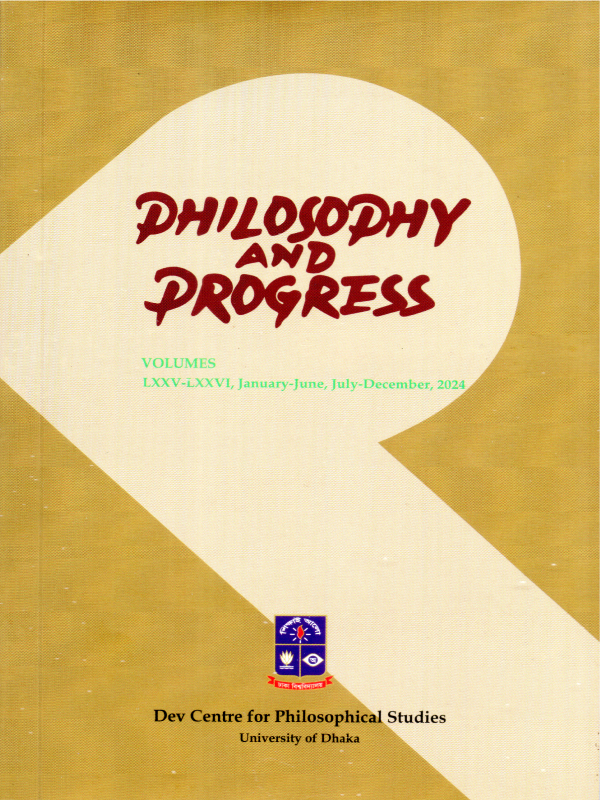
DEVELOPMENT AND FREEDOM IN BANGLADESH THROUGH THE LENS OF AMARTYA SEN’S “DEVELOPMENT AS FREEDOM” PARADIGM
This study investigates wh ther Bangladesh has been successful in transferring its social and economic development accomplishments to political development during the Awami League regime (2009–2023). The two main facets of development—economic and social—are, frequently, the only ones taken into account by modern techniques of evaluation. The other part of development, the political one, is frequently ignored by evaluation techniques. The majority of Bangladesh’s social and economic accomplishments are true, according to this study’s analysis of development as freedom, but they have not yet been applied to the country’s political arena. By comparing Bangladesh’s accomplishments to India’s through the lens of Amartya Sen’s concept of “Development as Freedom,” it is concluded that these successes have given Bangladesh “an uncertain glory.”Bangladesh’s achievements are primarily flawed by a lack of political freedom, in contrast to India’s achievements, which were marred by disparities and a slow pace of social growth.
TEACHERS AND THEIR ROLE IN ENSURING QUALITY EDUCATION: AN ISLAMIC PHILOSOPHICAL PERSPECTIVE
This paper addresses the gap between material and moral education by exploring the role of teachers in ensuring quality education from an Islamic philosophical perspective. The study investigates how Islamic principles of Towhid (oneness of God), Amanah (divine trust), and the integration of Naqli (revealed) and Aqli (rational) knowledge can guide teachers in nurturing intellectually, morally, and spiritually balanced individuals. It also puts specific focus on the concept of Hikmah (spiritual wisdom) as derived from internal Islamic sources. Employing a qualitative methodology, the research draws on Qur’anic verses, Hadith, and works of classical Islamic scholars like Al-Ghazali, Ibn Sina, and Al-Farabi to conceptualize the teacher’s multifaceted role. Finally, I argue that teachers are not merely transmitters of knowledge, but ethical guides, social reformers, and agents of Hikmah. Integrating these insights into contemporary education systems can enrich moral foundations and foster holistic human development.
PHILOSOPHICAL PROGRESS AND EVOLVING CHALLENGES: AN EVALUATION WITH SPECIAL REFERENCE TO JESSICA WILSON
This article attempts to revisit the concept of philosophical progress. Is philosophy making progress? If yes, to what extent? In recent times, philosophers have believed a variety of positions regarding the answers to these issues, ranging from the belief that no progress has been made at all, whatsoever others argued that philosophy has addressed every major philosophical questions. These opinions, however, are challenging to analyze and assess, in light of the fact that they are based on different perspectives about the circumstances under which philosophical advancement might occur. Reexamining the concept of philosophical progress is one of its plans. In this article, the following issues will be addressed: firstly, to explain concept of progress in philosophy; secondly, to analyze the debates about the prevalence of philosophical progress; thirdly, to expound three challenges to philosophical progress with special reference to Jessica Wilson; fourthly, resolutions to overcome the philosophical challenges. This article closes with some reflections on philosophical progress in the future.